Pulled Over: What ICE's New Memo Changes, and What It Does Not
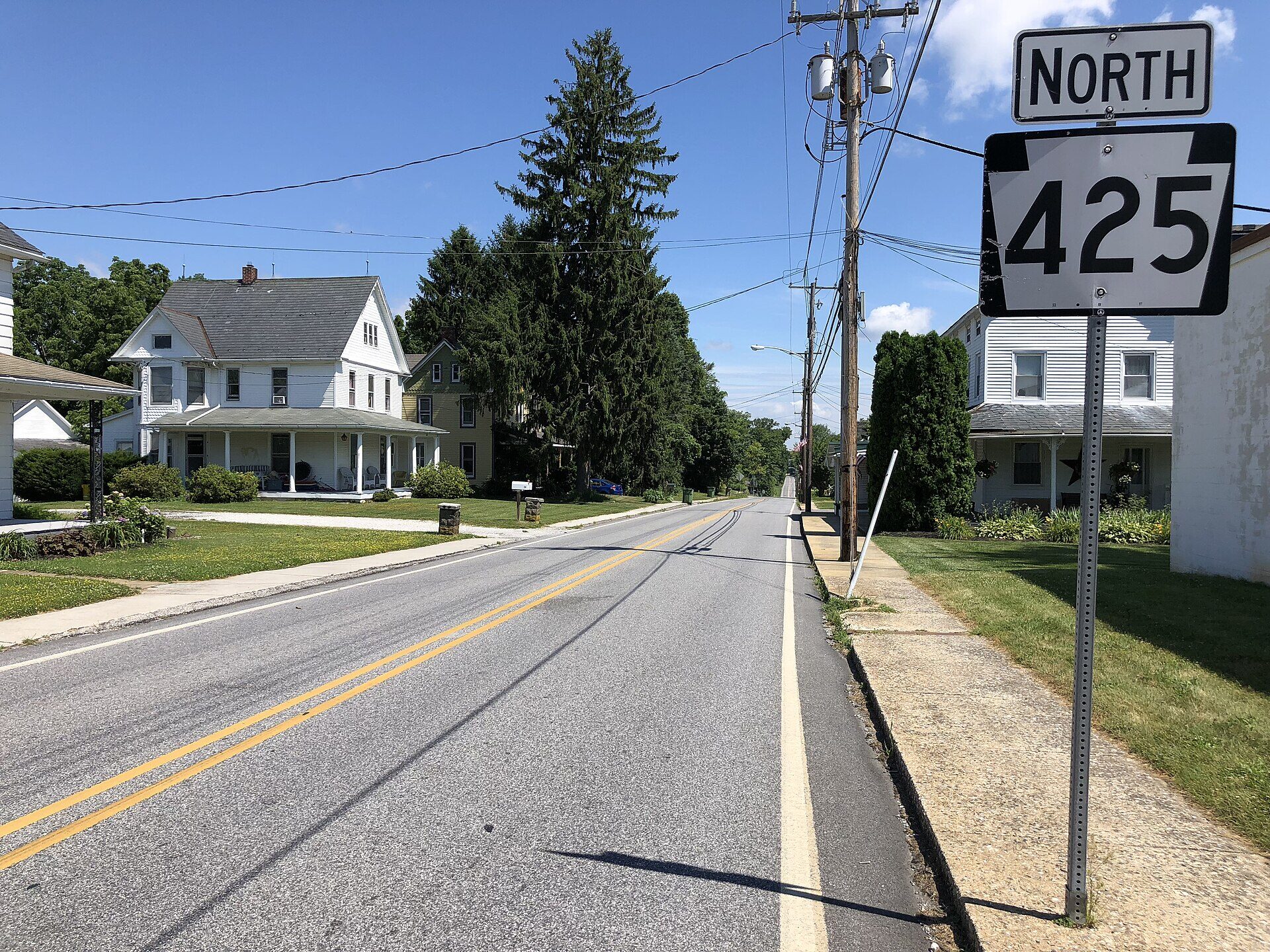
Almost every story on this page that begins with a person being taken begins somewhere ordinary. A burned-out headlight. A brake light. Driving 45 in a school zone. A van on the way home from work. A gas station on South Limestone Street. The road is where this has been happening, and this week the agency that does it wrote down some rules for itself about how.
A memo signed inside Immigration and Customs Enforcement on Wednesday, Sept. 30, tells officers they are not authorized to chase a vehicle that fails to pull over, and that only officers who have finished specific training may make vehicle stops at all. Two newsrooms obtained it independently.
It is worth being careful about what that means, because a document like this can be read two opposite ways, and both of them are wrong. It is not the end of vehicle stops. It is also not nothing.
What the memo says
The memo went to officers in ICE’s Enforcement and Removal Operations division and is signed by the agency’s executive associate director, Marcos D. Charles. The Associated Press obtained it and reported its contents on Oct. 1; the Washington Examiner obtained it separately and reported it the same day. This page has read both reports and has not seen the memo itself, so everything below is what those two newsrooms say it contains.
According to the AP, officers are not authorized to chase vehicles that fail to pull over under any circumstances. Instead, they are told to take down the vehicle’s information for further investigation. Only officers who have completed one of five specific agency training courses may conduct vehicle stops; officers who have not completed that training may take part only in a support capacity, as passengers, and may not drive any of the vehicles involved. Field office directors are told to make sure vehicles used for traffic stops have lights and sirens that identify them as law enforcement when activated. All officers at the scene of a vehicle stop must wear and activate their body cameras.
Two techniques continue. The guidance allows officers to keep using what it calls pinning — using a vehicle or a physical barrier to trap or stop a car — and to keep using spike strips that deflate tyres, in both cases only if they have had particular training.
The AP reports that the memo replaces and amends earlier directives, and that it follows a period in which ICE-initiated vehicle stops repeatedly escalated. ICE agents fired their guns during more than a dozen such encounters since last year, the AP reports, killing at least four people and wounding several others.
What ICE said about its own memo
This is the part that decides how to read the rest. Asked about the memo, ICE played it down. “Occasionally, ICE leadership issues guidance reminders to law enforcement officers,” the agency said in a statement quoted by the AP, and then the sentence that matters most to anyone reading this page: “Vehicle stops and arrests of illegal aliens continue.”
That is the agency’s own description of what changed, and it is the honest headline. Nothing in this memo tells officers to stop making vehicle stops. It tells them which officers may make them and how they must be equipped while they do.
The recent history explains why the caution is warranted. After drivers were fatally shot in Maine and in Texas in July, ICE officers were directed to pause most vehicle stops. The next day, the AP reports, the president directed the agency on social media to continue traffic stops, calling them one of ICE’s most important and effective crime-fighting tools. A direction that lasted one day in July is the reason nobody should plan a week around a direction signed in September.
Why none of this is permission to drive away
If you take one thing from this article, take this one. A memo telling officers not to chase is not a rule telling drivers they may leave.
The memo binds officers. It does not change anything about what happens to a person who drives off. The clearest illustration is a case this page has been carrying since Sept. 23. In Austin, Texas, an ICE officer shot Wilber Rafael Garcés Pérez, a 28-year-old Venezuelan man, while he was delivering DoorDash orders on Sept. 20. He is now charged in federal court with assaulting, resisting, interfering and impeding a federal officer, and faces up to 20 years if convicted. A charge is not a conviction, the accounts of what happened conflict, and this page is not resolving them. But the shape of it is the warning: an initial traffic stop, a car that left it, and a criminal case that followed.
The AP notes that the memo landed on the same day that testimony in that case described conduct the new guidance would not allow — the officer who fired was not wearing a body camera, and a second officer turned his camera off during the pursuit. That testimony is already on this page in the Sept. 30 entry. The memo did not undo any of it.
And “we will not chase you” is not “we will forget you.” The instruction in its place is to write down the vehicle’s information for further investigation. In Austin, a Homeland Security agent testified under oath that officers found Garcés Pérez by running his licence plate and then waited for him to drive off so they could stop him away from people. Not chasing has never been the same thing as not looking.
What the record on this page already shows about stops
Against that, set what has actually been happening to the readers of this page.
Pastor Molis Augustave was pulled over near midnight on Sept. 4 for a burned-out headlight while delivering for DoorDash in West Manchester Township, Pennsylvania; the township has a 287(g) agreement, so the routine check queried ICE’s database, and he ended up in a Louisiana detention centre. Amson Charleston, 26, an IT specialist and youth soccer coach, was stopped in West York for a burned-out brake light on Aug. 24 and was in a Clearfield County facility by that night. Emmanuel Nelson, 18, a high-school senior in Port St. Lucie, Florida, was pulled over on Aug. 19 for driving 45 in a 20 mph school zone, and officers called ICE during the stop. In Springfield, Ohio, five people were taken from one van on the way home from work in August, and a pastor was taken at a Sunoco on South Limestone Street.
None of those began with a chase. Every one of them began with a small, ordinary reason to be pulled over — and the enforcement happened during the stop, not after a pursuit. That is why a rule about pursuits changes less than it sounds like it should. CBS News, analysing data obtained by the Deportation Data Project, found that across June and July at least 45,300 arrests — nearly half the total — were made in communities rather than in jails or prisons, with agents turning to traffic stops among other methods.
What to do, and what to keep
The body-camera requirement is the usable part, because it is now the agency’s own stated rule rather than an outside demand. If you are stopped, or if you watch a stop happen, the instruction on this page has not changed and now has something to attach to: record it if you can do so safely, write down the date, the time and the exact place, note whether the vehicles were marked and whether cameras were on, and get that to a lawyer instead of only posting it. Almost everything known about the Austin shooting came from cameras that were not the agency’s.
Three more things, none of which depend on this memo:
Keep your papers and keep copies. Whatever you are handed at a stop, at a check-in or at an office, photograph it, keep your own copy, and give a copy to a lawyer and not only to the officer. Log the dates.
Find out whether a judge has ever ordered your removal. The immigration courts’ automated line, 1-800-898-7180, is free and answers 24 hours a day, and will read back the next hearing date and a judge’s decision from an A-number. It speaks English and Spanish only, so have someone who speaks one of them sit with you; it gives only the most recent case; and if you have never had a case in immigration court you will find nothing there, which is not a sign that anything is wrong.
Decide today who may collect your child. Name that person, tell the school, and write it down. That decision costs nothing and does not depend on anyone’s permission.
What has not changed
Temporary Protected Status for Haiti and for Syria is terminated, effective July 27, 2026, and the work permits that ran with it ended the same day. Nothing in this memo touches any of that.
Losing TPS is still not a deportation order. Most people who lost it do not have a judge’s order of removal — but if a judge has already ordered your removal, that order did not go away, and that is this week’s question for a lawyer.
And nobody may charge you a fee because of a memo. There is nothing to apply for here, nothing to sign up for, and no form that this guidance creates. Anyone who tells you otherwise is selling something.
Sources
- Associated Press (Ryan J. Foley, with Anna Wilder in Austin, Oct. 1, 2026, 18:36 UTC) — 'New ICE guidance bans high-speed car chases and sets tighter rules for traffic stops, a memo shows.' The memo was obtained by the AP; this page read the AP report in full from a member station's own page and has not seen the memo itself
- Washington Examiner (Anna Giaritelli, Oct. 1, 2026, 21:53 UTC) — 'Trump administration does another about-face on ICE vehicle stop policy.' A separate newsroom that obtained the same memo; its opening two paragraphs were readable to this page and the remainder is behind its subscription wall
- Ohio Capital Journal (Megan Henry, Oct. 2, 2026) — 'Five Haitians from Springfield, Ohio have been deported after Trump ended protected status.' Read in full from the paper's own feed
- USCIS — Temporary Protected Status: the Haiti and Syria designations are terminated, effective July 27, 2026. Page stamp 09/09/2026, re-read Oct. 2, 2026 against this site's status record
- USCIS I-9 Central, Form I-9 related news — the dated index of every TPS employment-authorization announcement by country. Its most recent Haiti item is dated July 29, 2026; nothing on it extends any Haitian work permit. Re-read Oct. 2, 2026
Community discussion
Comments are moderated before they appear. Never share your A-number, address, or case details here, and never trust legal advice from comments — talk to a licensed attorney (free help here). Comments are provided by GraphComment (EU-hosted, GDPR-compliant) and are optional.