The Form in the Drawer
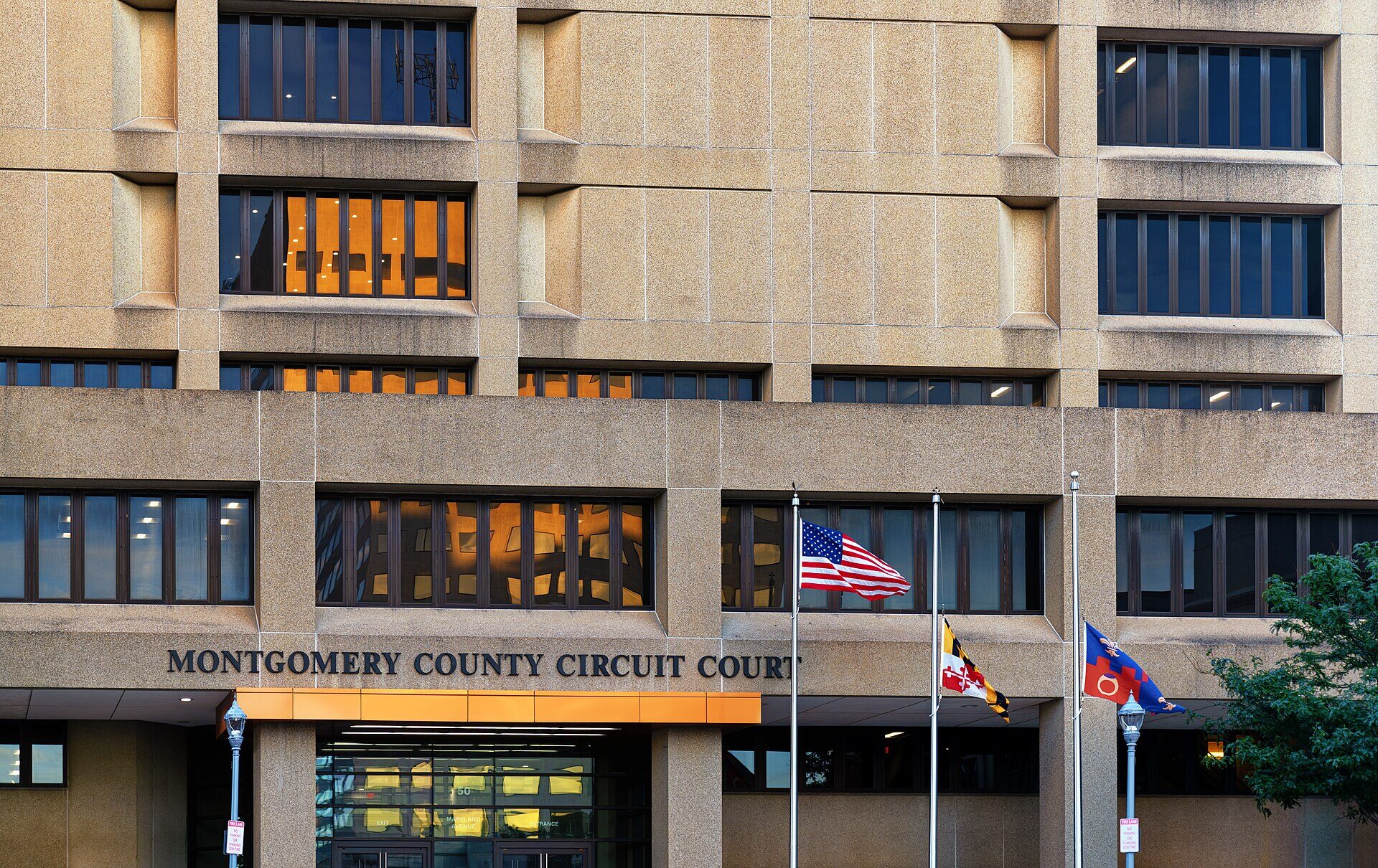
There is a form in Maryland that costs nothing, takes two witnesses, and is never filed with a court. It says who may care for your children if immigration takes you. The Maryland Judiciary publishes it in Haitian Creole.
That is the whole of the news, and it is worth more than most of what this page carries, because it is one of the few things on this site that a household can finish by itself, this week, without a lawyer’s appointment, without a fee, and without telling anyone.
This is not a prediction about you. Nobody has to leave the country, and losing TPS is still not a deportation order.
The parent who has not signed anything
The document is called the Parental Designation and Consent to the Beginning of Standby Guardianship — form CC-GN-041. The bilingual English–Haitian Creole version is CC-GN-041BLH, revised February 2025, eight pages, free on the court’s own website.
A parent uses it to name an adult who may step in to care for a minor child, and an alternate if the first person cannot. On the form itself the parent ticks which decisions that person may make: schooling, medical care, housing, travel. You are not handing over your children. You are writing down, before anything happens, the name of the person you would have named anyway at four in the morning over a telephone.
The Maryland Judiciary’s own page says the designation can begin after an “adverse immigration action,” which it defines as “any immigration event that affects your ability to take care of your kids.” Its examples, in the court’s words, are: “getting arrested or detained by immigration authorities”; “being put in proceedings to remove you from the United States”; “leaving the U.S. due to an order of removal, deportation, or voluntary departure”; “being denied admission to the United States”; and “the denial, revocation, or delay in the issuing of a visa.”
This page is not telling you whether your own situation is on that list. That is a question for a lawyer, and the form is a sensible thing to take to one.
This week: download the form in the language you read best, and write down on paper the name and telephone number of the adult you would call. You can do that tonight. (tools and checklists)
The child who is a United States citizen
A child who is a U.S. citizen cannot be deported. That has never been the danger. The danger has always been the hours — the school gate at three o’clock, the night when nobody comes, the stranger who has no paper showing they are allowed to collect anyone.
Cam Crockett, who directs the Standby Guardianship Project and helped lobby the Maryland General Assembly in 2018 to widen the law, told The Baltimore Banner how the paperwork is meant to live: “Parents can privately sign this document, and they can just put it away once it’s signed by all the parties. It can be put in a drawer until the children are 18.”
A drawer is the right place for it. Most of these forms will never be used, and that is the point of them.
This page has watched the same instruction work before. On Sept. 15 it reported a Head Start programme releasing a two-year-old to the emergency contact the family had designated in advance. The designation was the whole of what made that possible.
This week: tell the school, the day care and the doctor’s office the name of that adult in writing, and keep your own dated copy of what you gave them. (family plan)
The household where someone is already held
Paperwork signed afterwards is worth less, but it is not worth nothing, and the record you keep is worth a great deal.
On Oct. 8 this page reported the death of Julián Curo-Churata, 47, who had lived in Laurel, Maryland for about seventeen years and died in ICE custody in Louisiana on Sept. 29. He leaves a wife and a six-year-old daughter. A lawyer for the family has since said he is investigating whether guards ignored urgent requests for medical attention; ICE says he received proper medical care. Nothing has resolved which account is right, this page asserts no cause of death, and both accounts are set out in full in the feed entry for Oct. 8.
One fact from the court record belongs to every family with someone detained. A habeas corpus petition was filed for him on Aug. 7, 2026 — not in Maryland, where his family lives, but in the federal district court in western Louisiana, because that is where he was held. A habeas petition follows the body. A transfer moves the courthouse.
That is why the name of the facility matters more than almost anything else you can write down.
This week: every time you telephone about someone held, write down the date, the time, the facility and the name of the person who answered, and keep your own copy. Ask for anything medical in writing. (how to find someone who is detained, free legal help)
The person who has just been asked
Somebody has to say yes, and in a shrinking congregation that person is often the only one left.
The Rev. Vidal Rivas, senior priest at St. Matthew’s Episcopal Church in Hyattsville, has agreed over four years to serve as standby guardian for 31 children whose parents fear being detained. From January to July of this year he and his wife cared for two of them while their mother was held; the children went back to her in July. He counts at least fifteen parishioners deported since the last election, and says almost a third of his congregation has stopped coming to services. His congregation is largely Central American. The story names no Haitian and no Syrian, and it is in front of you for the mechanism, not the arithmetic.
If you are the person being asked, read the limits before you sign, because they are the part nobody explains.
The bilingual form says on its own pages that the forms “are in bilingual format for your convenience, but must be completed and filed with the court in English.” The Creole is there so you can understand what you are signing — it is not the version the court reads.
Your authority as standby guardian “will end after 180 days unless by that date the standby guardian petitions the court for appointment as guardian.” After six months it becomes a court matter, in the county where the children are.
And the parent keeps everything. In the form’s own words: “I/we retain full parental rights even after the beginning of the standby guardian’s authority and may revoke the standby guardianship at any time.”
This week: if you have been asked, say yes or say no, and tell the family which. An unanswered question is the worst version of this.
If you are not in Maryland
Priya Baskaran, a law professor at American University who studies these statutes, told the Banner that Maryland is one of only nine jurisdictions — eight states and the District of Columbia — whose standby guardianship laws are triggered immediately when a detention or deportation happens. Where immigration is not written into the statute, she said, relying on it is “kind of a gamble.”
So do not assume your state’s law works the way Maryland’s does. Other families on this page have used other instruments: in Springfield, Ohio, parents worked with Springfield Neighbors United and St. Vincent de Paul to apply for U.S. passports for their citizen children and sign a power of attorney naming a trusted adult. In Charleroi, Pennsylvania, Haitian residents and local churches sat down with Frontline Dignity and worked through temporary guardianship papers before anyone needed them.
The Maryland Judiciary’s own page links the Standby Guardianship Project, which says on its site that it runs a free clinic and gives one telephone number, 240-535-5966, under the name of its director, Cam Crockett. That site’s own download page offers the form in sixteen languages, and Haitian Creole is not among them — the Creole version is the one on the court’s site. This page could not confirm what languages the clinic itself answers in, so ask when you call.
Nobody may charge you a fee to sign a form you can download for nothing, and nobody can sell you a place in anyone’s court case.
This week: ask a lawyer what your own state’s law does. (free legal help)
What has not changed
TPS for Haiti and Syria has been terminated since July 27, and work permits expired the same day. USCIS’s own page, re-read today, still says so in those words, and no work-permit extension exists for either country.
Losing TPS is still not a judge ordering you personally to leave, and most people who lost it do not have such an order. But if a judge has already ordered your removal, that order did not go away, and that is this week’s question for a lawyer. You can check your own case for free on the immigration court line, 1-800-898-7180, or at the online case status page. If you have never had an immigration court case you will find nothing there, and the line answers in English and Spanish only.
None of this stops a detention. A form in a drawer does not change anyone’s immigration status and it does not keep a door closed. What it does is answer, in advance and in your own handwriting, the one question a frightened family cannot answer quickly enough: who comes for the children.
Know your rights · Find free legal help · Tools and checklists
Sources
- Maryland Judiciary — Standby Guardianship. Read raw this run. The source for the definition of an 'adverse immigration action' and for the full list of examples, including 'getting arrested or detained by immigration authorities' and 'being put in proceedings to remove you from the United States'; for the 180-day limit; for 'Standby guardianship does not affect your parental rights'; and for the form numbers CC-GN-041, CC-GN-042, CC-GN-043 and CC-GN-053
- Maryland Judiciary — form CC-GN-041BLH (Rev. 02/2025), the bilingual English–Haitian Creole 'Parental Designation and Consent to the Beginning of Standby Guardianship', eight pages. Read directly from the court's own site this run. The source for 'The forms are in bilingual format for your convenience, but must be completed and filed with the court in English,' for the 180-day sentence in the parent's own acknowledgement, and for 'I/we retain full parental rights even after the beginning of the standby guardian's authority and may revoke the standby guardianship at any time'
- The Baltimore Banner, Oct. 12, 2026 — 'Who cares for children of deported parents? This priest has signed up to take on 31.' by Ginny Bixby and Kasturi Pananjady, published 10/12/2026 5:30 a.m. EDT. The source for the Rev. Vidal Rivas and St. Matthew's Episcopal Church in Hyattsville, for the 31 children, for the two children he cared for from January to July, for Cam Crockett's account of the 2018 expansion and the 'drawer' quote, and for Priya Baskaran's account of the nine jurisdictions
- Standby Guardianship Project — the organisation's own site, linked from the Maryland Judiciary's standby guardianship page. Read raw this run: 'Standby Guardianship Project, Inc. Cam Crockett, Director 240-535-5966', a 'Free Clinic' among its listed services, and a form download list of sixteen languages that does not include Haitian Creole
- The Baltimore Banner, Oct. 9, 2026 — 'Laurel man's pleas for medical attention in ICE detention were ignored, lawyer says,' by Ashley Clarke. The source for the statement of Max Schoening of Qureshi Law and for ICE's non-response
- USCIS — Temporary Protected Status. Re-fetched this run: page stamp 09/09/2026, 'The Haiti TPS designation is terminated, effective July 27, 2026' and 'The Syria TPS designation is terminated, effective July 27, 2026'
- Executive Office for Immigration Review — the automated case information line, 1-800-898-7180, and the online case status page: the free way to check whether an immigration judge has ever ordered anything in your own case
Community discussion
Comments are moderated before they appear. Never share your A-number, address, or case details here, and never trust legal advice from comments — talk to a licensed attorney (free help here). Comments are provided by GraphComment (EU-hosted, GDPR-compliant) and are optional.